Rachel Carson’s impact on regenerative farming
“The most alarming of all man’s assaults upon the environment is the contamination of air, earth, rivers, and sea with dangerous and even lethal materials.”
– Rachel Carson, Silent Spring
The year is 1962. The Beatles just released their first single, the Cuban Missile Crisis shook the world, and the first American orbited the Earth. In the same year, amid the heyday of the chemical and pesticide era, Rachel Carson published Silent Spring, a book that would spark the modern environmental movement. The book awakened the world to the dangers of pesticides, and revealed how deeply the way we farm is connected to our health and the future of the planet. Today, as pesticide use continues to rise around the world, Carson’s work is as urgent and relevant as ever.
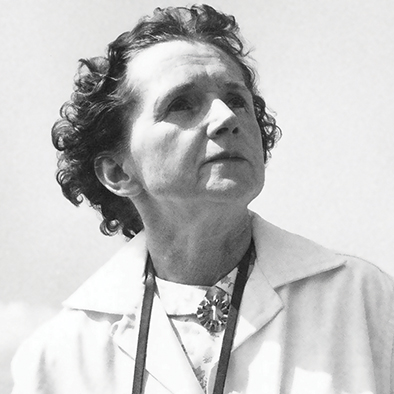
After the publication of Silent Spring, the chemical industry attempted to discredit Carson, dismissing her as a “hysterical spinster” whose concerns were typical of “emotional women in garden clubs.” They even mocked her concern for children because she had no children of her own. “She was a fanatic defender of the cult of the balance of nature,” stated Dr. Robert White-Stevens, a former biochemist and assistant director of the Agricultural Research Division of American Cyanamid. As a spokesman for the chemical industry during the 1960s, White-Stevens told the public, “If man were to follow the teachings of Miss Carson, we would return to the Dark Ages, and the insects and diseases and vermin would once again inherit the earth.” But science would soon prove that Rachel Carson was right all along.
Silent Spring appeared during a period of blind faith in chemicals. For the first time, a book explained to the general public that pesticides used on farms do not simply “disappear” after being sprayed, but instead contaminate soil, air, water, food – and even our own bodies. Carson warned that pesticides were poisoning insects and birds by accumulating up the food chain, and would lead us to a silent future in which birdsongs would vanish. Indeed, since the 1970s, songbird populations have plummeted by around 29%. Carson showed that when corporate profit is prioritized over health, it is children, farm workers, communities, and entire ecosystems that pay the price.
Carson died just two years after her book’s publication, at the age of 56. Yet, her legacy lives on through the far-reaching impacts of her work, including the creation of the U.S. Environmental Protection Agency, the nationwide ban on dichlorodiphenyltrichloroethane (DDT) in 1972, and the rise of environmental and sustainable agriculture movements.
Regenerative agriculture is a method of producing food that is rooted in Indigenous knowledge and millennia-old farming practices that recognize the interconnectedness of soil, water, plants, animals, and people. It restores, rather than depletes, the living systems on which we depend. At its heart is the principle that soil is alive – and that when we care for it, it cares for us in return. Instead of relentlessly extracting from the land, regenerative farming helps heal ecosystems by building organic matter in the soil through crop diversity and rotation, cover cropping, and reduced chemical use.
Regenerative farming is a holistic solution to many of today’s interconnected crises, including climate change, poverty, food insecurity, and biodiversity loss. For example, regenerative practices pull excess carbon from the atmosphere, and foster healthier soils that are able to hold more water, making communities more resilient to droughts, floods, and erosion. Food grown in biologically rich soil tends to be more nutrient-dense and requires fewer synthetic chemicals, reducing toxic exposure for farmworkers, nearby communities, and families. Regenerative farms also strengthen rural economies by prioritizing long-term fertility over short-term yield, helping farmers stay on the land in a sustainable way.
At a time when environmental safeguards are being rolled back and industries are increasingly trusted to police themselves, regenerative agriculture takes on new urgency. When environmental regulations are weakened, pollution intensifies, entering the air, water, and food systems, as Carson warned. While regenerative farming does not replace the need for strong environmental policies and collective action, it does put power directly into the hands of farmers and communities. In uncertain times, regenerative agriculture can become a quiet form of resistance – one that safeguards health, soil, and future generations by placing people over profit.
Food is one of the most intimate ways that we interact with the land around us. By supporting farmers who rebuild soil and ecosystems, we all have the power to help shape a healthier planet. Carson reminded the world that “in nature nothing exists alone.” Ultimately, regenerative agriculture reconnects food with care – honoring the idea that she championed: that human health and the health of the Earth are inseparable.