Tips to Manage Rising Costs
You can’t go anywhere today without seeing the increased costs of everything. When the dollar loses value, it takes more money to purchase the same amount of goods; this is called inflation. There is an even greater cost, more important than currency: the negative impact of rising costs of everyday necessities on mental health.
Financial stress is caused by various factors, including the inability to meet daily expenses, overwhelming debt, unexpected emergencies, fears about losing employment or retirement, and concerns about health. Long-term financial insecurity can lead to anxiety, depression, insomnia, strained relationships, and poor physical health. Also, the pressure to keep up with rising expenses may cause individuals to prioritize work over self-care, leading to burnout and emotional exhaustion.
At a time when self-care and support are most needed, it is often unattainable. Increasing health care costs and access to mental health services become more constrained, and people may find themselves struggling with untreated or undertreated mental health disorders, making quality of life even more challenging.
The good news is that there are several steps individuals and families can take that do not add to financial stress.
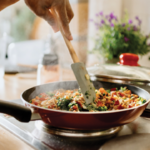
Healthy meal preparation is crucial for individuals and families who are always on the run with work, kids, and other responsibilities. One-pot meals, such as soups, casseroles, and stews, are not only a way to provide healthy meals, but are also less expensive. For example, rather than cooking a chicken for a single-family meal, it can be made into a stew with legumes, rice, and vegetables that will feed the family for two or three meals. Another example would be, rather than burgers, make a beef chili with beans and vegetables that will cover several meals. If there is a rebellion after having the same meal for two nights in a row, freeze the remainder and enjoy it another day.
Slow cookers are great for this. Prep the food in the evening, and in the morning, simply throw ingredients in the slow cooker, and away you go. Dinner is ready when you get home. Your grocery bill will go down, and your stress levels will decrease, not only because of the lower cost, but also because of less stress around meal preparation. At the end of the day, the family is getting healthy food, which also improves mental and physical health.
Exercise is a catch-22 –the more stressed a person feels, the more they need to exercise. But stress reduces motivation to exercise. Just do it – the more you move, the better you will feel, especially if you can walk in nature. Consider having a brisk family walk before or after dinner, and on weekends, consider hikes or a family bike ride.
Meditation has proven to be a highly effective tool for managing the anxiety, stress, and overwhelming feelings associated with the rising cost of living.
Several supplements are effective for reducing stress-related disorders, including anxiety, depression, and insomnia. Yes, there is a cost; however, when a person is feeling stronger mentally and emotionally, it becomes easier to take additional steps to plan ahead and at least keep up with the increasing costs of living.
Saffron: Studies have shown that saffron is effective for mild-to-moderate depression and anxiety, and is as effective as conventional selective serotonin reuptake inhibitors (SSRIs) with a more favorable safety profile and fewer side effects.
L-theanine promotes relaxation, and studies have shown that it reduces stress and anxiety and helps with insomnia.
GABA is the most inhibitory neurotransmitter in the brain, acting as a brake under increased stress. Low levels of GABA have been linked to anxiety, depression, and insomnia.
MAIZINOL® can be effective for sleepless nights, helping to reduce cortisol, a biomarker of stress, balancing mood, and improving sleep quality.
Please remember that when things are difficult, this too will pass; tomorrow is another day. Keep putting one foot in front of the other, but don’t trip. I hope you have calmer, “no-trip” days as we all navigate these challenging times.
Eat Like an Italian
What, more than anything, characterizes the typical North American’s meals? Distraction!
The TV, the phone-surfing, the intrusive messages and texts… for most of us, the food we’re eating and the people we’re sharing our meals with play second fiddle to everything else going on at that dinner table. To change up the dynamic, consider eating like an Italian. The advice comes from Little Italy, a food tour company in San Diego, California.
Savor your food: Find time to enjoy your meal without distraction. Turn. It. Off.
Relish your dinner companions: Italians enjoy family and welcome others as if they were family. Make dinner a time of sharing and bonding as well as eating.
Be generous: Get out of the habit of cooking the usual things for the same one (i.e., you) or two people. Cook different and better food for the famiglia (family) and extend the enjoyment of your favorite dishes to guests.
Set a bigger table!
Slow down and let things simmer: Once everyone has gathered, there’s no need to rush. Offer a drink, perhaps an aperitivo, and pass the antipasto plate around. Take your time with the main course and enjoy conversations over dessert. Why the hurry?
The real world will be waiting for you, but for now, it’s dinnertime!